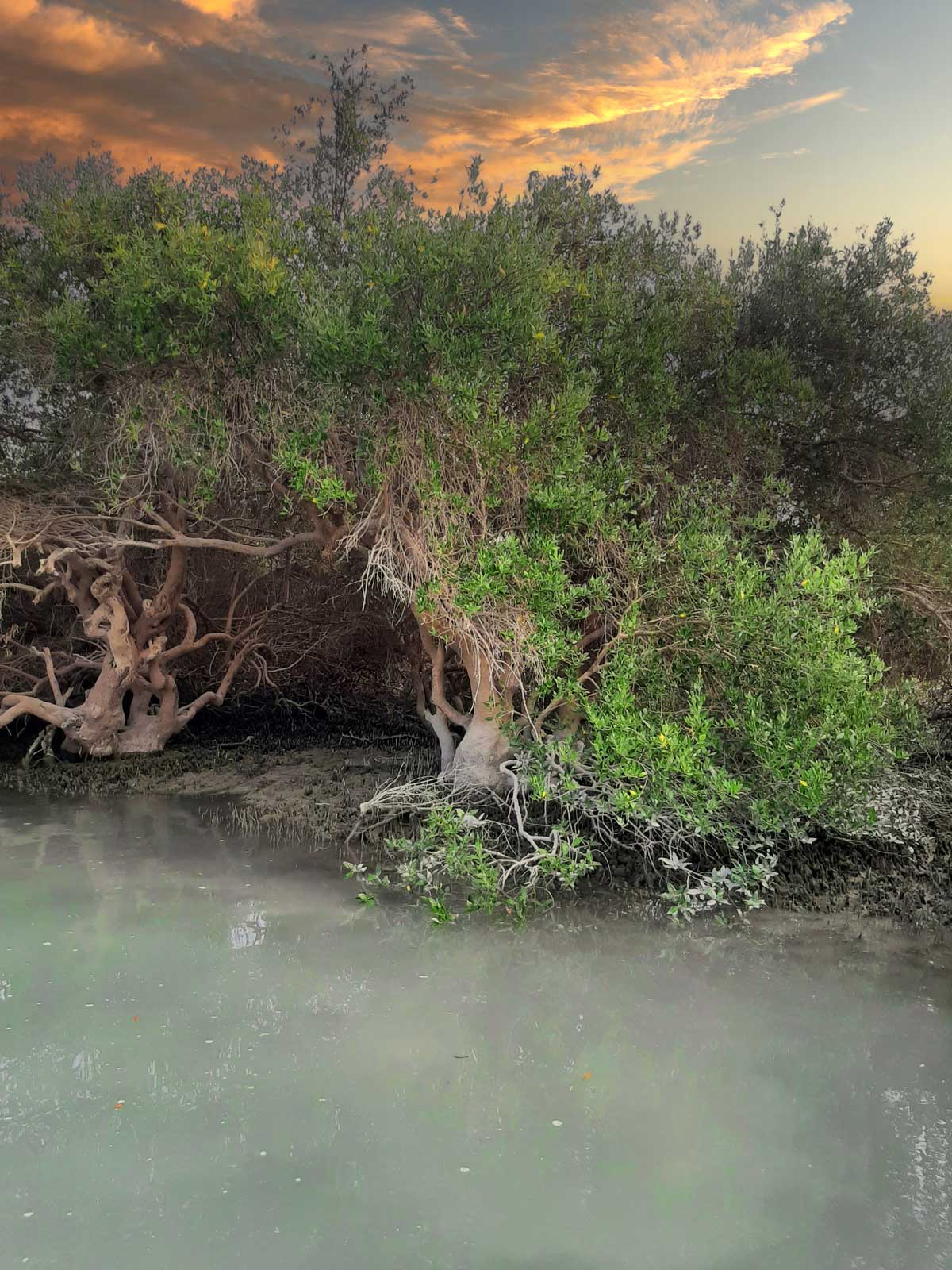
کاوش در میکوبیوم جنگلهای مانگرو
Sampling in the mangrove forests of Qeshm Island wasn't just a routine scientific task; it was a true physical and logistical challenge. Because of the dense, muddy tidal zones and the complex root systems of Avicennia marina, our sampling sites were only accessible by boat. Navigating through these flooded forests under the intense heat and humidity of the Persian Gulf was exhausting, but being surrounded by such a unique ecosystem made every moment thrilling. Once the tissues were collected, the real race against the clock began. To maintain the viability of the delicate endophytic fungi and prevent contamination, the fresh samples had to reach our laboratory immediately. We managed to transport the entire batch by airplane, ensuring they were on the lab bench and ready for processing in less than 24 hours. However, the true test of patience started in the lab. While we successfully identified 186 isolates across 16 distinct genera, the journey was long. Beyond the easily identifiable species, I encountered numerous sterile mycelial fungi and exceptionally slow-growing isolates. In fact, some of these extremotolerant endophytes were so dormant or slow to adapt that they only started to emerge and grow from the cultured plant tissues after two full months of incubation. Consistently monitoring those plates and refusing to discard them prematurely was key to uncovering this hidden mycobiome, making all those challenging days on the boat and the long months of waiting in the lab completely worth it.